
Cotton Classroom

Cotton Classroom

What to Wear for Diwali Parties? 7 Stylish & Comfortable Outfit Ideas for Women

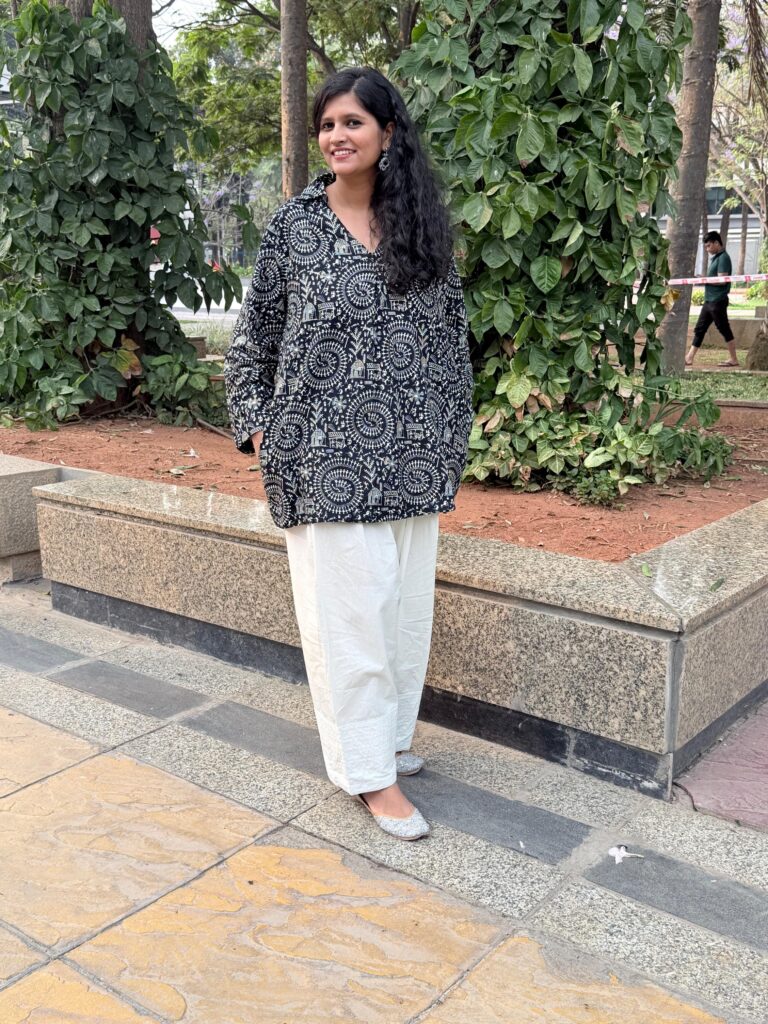
What to Wear for Diwali Parties? 7 Stylish & Comfortable Outfit Ideas for Women “Diwali aa rahi hai… but what am I going to wear?” Sounds familiar? One outfit is too heavy.Another looks beautiful but feels uncomfortable after two hours.The saree looks gorgeous… until you remember you’ll be running around serving guests. 😄And that beautiful outfit you bought last year? Somehow, it is still hanging in the wardrobe with the tag of “next Diwali.” The good news? You don’t need a completely new wardrobe for every Diwali plan. From a family puja to an office celebration, a card night to dinner with friends, the trick is to choose an outfit that feels festive without making you spend the evening adjusting it. Festive fashion can be stylish, comfortable and wearable again — and that is exactly what we’re looking for. 1. The Family Diwali Party: Keep It Pretty, Not Precious You know the scene. Someone is asking you to help with the diyas.Someone else wants a family photo.The kids are running everywhere.And somehow you’re also expected to sit nicely for dinner. This is where a comfortable kurti or relaxed co-ord set works beautifully. Choose cotton, breathable fabrics and an easy silhouette. Add statement earrings, a small bindi and comfortable flats or juttis. You get the festive feel without spending the entire evening worrying about your outfit. Try this combination: Printed kurti + straight pants + jhumkas + flats For a softer everyday-festive look, Taniroop’s Rose Glow Short Kurti can be styled with simple jewellery and neutral bottoms. It is a breathable cotton option that can move easily from everyday wear to a festive gathering. 2. The Office Diwali Celebration: Festive, But Still Work-Appropriate Office Diwali celebrations have their own dress-code confusion. You want to look festive. But not “I accidentally came dressed for my cousin’s wedding.” A short kurti with tailored trousers, cigarette pants or even well-fitted jeans can strike the right balance. Add: And you’re done. If your office celebration happens directly after work, this is even better — one outfit can take you from your desk to the Diwali celebration without a wardrobe change. Style tip: If your outfit already has a print or strong colour, keep the jewellery simple. You don’t need every accessory in your jewellery box to attend the same party. 😉 3. The Diwali Puja: Elegant, Comfortable & Easy to Move In Puja dressing doesn’t have to mean layers of embroidery and heavy fabrics. Think about what you’ll actually be doing. Sitting on the floor.Lighting diyas.Moving around the house.Greeting relatives.Taking approximately 47 family photographs. A lightweight kurta, short kurti or cotton co-ord can be a much more practical choice. Choose softer colours such as: Add gold-toned earrings and a simple bracelet for that festive touch. Taniroop’s Ivory Garden co-ord is a natural example of this kind of understated festive dressing — an ivory look can feel special without relying on heavy embellishment. 4. The Card Party: This Is Your Time to Add Some Drama Okay, now we’re talking. If you’re heading to a Diwali card party with friends, you can have a little more fun. This is where you can experiment with: Bold colours + statement earrings + a little sparkle You don’t necessarily need a heavily embroidered lehenga. A striking kurti with wide-leg pants, a printed co-ord set or an Indo-western combination can look just as festive. Want to make a simple outfit look more glamorous? Try: Statement earrings + sleek hair + small clutch + metallic footwear That’s it. You don’t need to wear everything shiny at once. Fashion publications have also highlighted kurtas, shararas, co-ords and other versatile silhouettes as options for different Diwali occasions, including card parties. 8 5. The Diwali Dinner: Dress Up Without Looking Overdressed Dinner plans are usually easier. You don’t need to look like you’re attending a royal wedding. A beautiful short kurti + trousers or a simple co-ord set can be perfect. Go for one strong element: Pick one and let it do the work. For example, a rich rust or warm-toned kurti can instantly create a festive mood. Taniroop’s Golden Hour Short Kurti, in a rust-brown shade with traditional motifs, is designed around this idea: cotton comfort with an ethnic feel. 6. The “I Have Three Events in Three Days” Outfit This is probably the most useful one. Because festive season isn’t usually one event. It’s: Office party → family dinner → puja → friend’s house → another family gathering And suddenly your wardrobe is exhausted before you are. The solution? Buy or choose pieces that can be styled differently for different occasions. For example: Look 1 — Daytime Kurti + trousers + flats + small earrings Look 2 — Evening Same kurti + statement earrings + heels + clutch Look 3 — Casual festive Same kurti + jeans + juttis + hoops This is why versatile pieces are worth keeping in your wardrobe. A good outfit shouldn’t have to retire after one Instagram photograph. 7. The “I Just Want to Be Comfortable” Outfit And honestly? This deserves its own category. Because sometimes you don’t want sequins. You don’t want six layers. You don’t want something that needs to be adjusted every five minutes. You just want to look good and enjoy the evening. That’s where cotton comes in. A breathable cotton kurti or co-ord set can give you an easy base. Add festive jewellery, a good pair of footwear and a little makeup — and you’re ready. And the best part? You can wear it after Diwali too. Because the most sustainable outfit in your wardrobe is often the one you actually wear again. The Real Secret to a Good Diwali Outfit? It’s not how expensive it looks. It’s not how much embroidery it has. And it’s definitely not whether you can survive three hours in it. 😄 A good festive outfit should make you feel like yourself — just a little more dressed up. Choose something you can sit in, walk in,

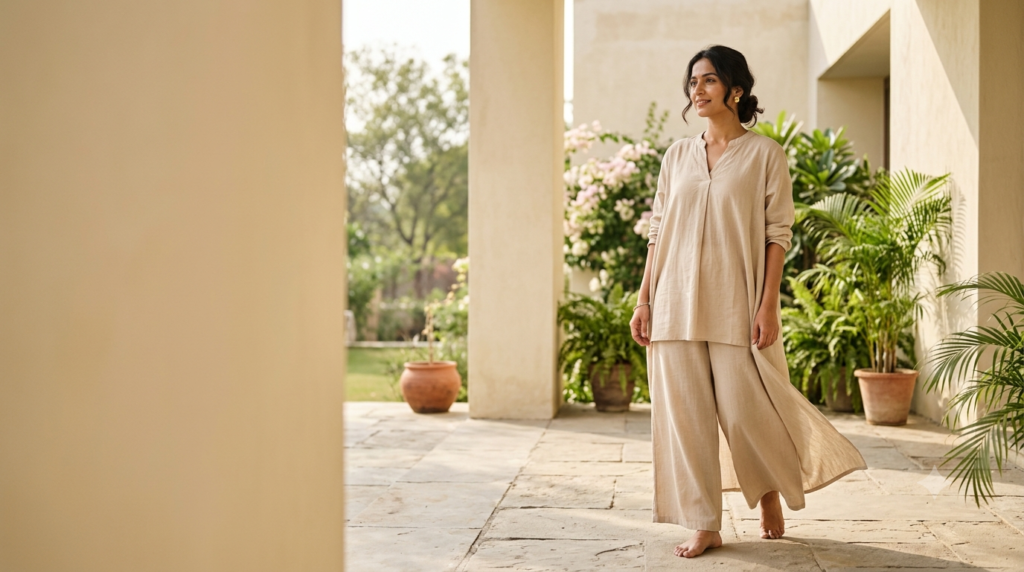
Woman wearing a flowing cotton outfit demonstrating soft, structured and flowing fabric
Cotton Classroom

Soft, Structured or Flowing? What Fabric Does to the Look of Your Outfit

Soft, Structured or Flowing? What Fabric Does to the Look of Your Outfit When we buy an outfit, we usually notice the design first. The colour.The print.The neckline.The silhouette.The way it looks on the model. But there is another element quietly deciding how that outfit actually looks on you — the fabric. Two dresses can have exactly the same design, but look completely different simply because they are made from different fabrics. One may fall softly around the body. Another may hold its shape. One may move beautifully when you walk, while another may create a more defined silhouette. That is the interesting part of fashion: fabric doesn’t just cover a design. It helps create the design’s personality. “Fabric drape refers to the way a fabric falls, folds and moves when worn, and it can dramatically change the look of the same outfit.” “What Does Fabric Drape Actually Mean?” In simple words, drape is the way fabric falls, folds and moves when you wear it. A fabric with a soft, fluid drape tends to move with the body and create gentle folds. A more structured fabric holds its shape and gives an outfit a cleaner, sharper appearance. And neither one is automatically better. It simply depends on the look you want. Think of it this way: Soft fabric → effortless and fluid Structured fabric → polished and defined Flowing fabric → movement and ease The same silhouette can therefore give you three completely different moods. 1. Soft Fabrics: For an Easy, Relaxed Look Soft fabrics tend to feel comfortable and move naturally with the body. They are often chosen when the goal is an outfit that looks easy, feminine and effortless, rather than very sharp or tailored. Lightweight cotton, rayon and similar fabrics can create softer movement, although the final appearance also depends on the fabric’s weight and construction. Imagine a simple summer dress. In a soft fabric, it may gently follow your movement as you walk. The overall look feels relaxed rather than formal. The fabric drape can make the same dress feel more relaxed and effortless. Perfect for: The beauty of a soft fabric is that it doesn’t have to try too hard. 2. Structured Fabrics: When You Want the Outfit to Hold Its Shape Now imagine the same dress made from a fabric with more body. Suddenly, the silhouette looks different. The shoulders may look more defined.The A-line may stand out more clearly.The folds may look sharper.The entire outfit may feel more polished. Cotton is particularly versatile because its drape can range from relatively soft to more structured depending on its weight, weave and construction. This is why saying “cotton always looks casual” isn’t quite right. A lightweight cotton dress can look soft and relaxed. A more substantial cotton fabric can create a much more defined silhouette. Structured fabrics work beautifully for: Sometimes, the simplest design looks the most polished when the fabric gives it enough structure. 3. Flowing Fabrics: When Movement Becomes Part of the Outfit Some fabrics are all about movement. You walk — the fabric moves. You turn — it follows. You sit — it falls around you. This is where fabrics with a more fluid drape become interesting. Rayon and viscose, for example, are often used when designers want a softer, more flowing silhouette. Flowing fabrics are especially beautiful in: They can give an outfit a softer and sometimes more dressed-up appearance without adding complicated detailing. 4. The Same Design Can Look Completely Different This is probably the easiest way to understand the importance of fabric. Imagine a simple A-line dress. In a soft cotton: It can look relaxed, comfortable and perfect for everyday wear. In a structured cotton: The A-line becomes more defined and polished. In a fluid fabric: The same A-line can become softer, more feminine and movement-focused. Same design. Different fabric. Completely different personality. That is why fabric selection is such an important part of fashion design. The fabric and the silhouette have to work together. This shows why fabric drape matters just as much as the design itself. 5. Fabric Weight Matters Too It isn’t only about whether a fabric is called cotton, linen, rayon or something else. Weight matters. A lightweight cotton and a heavy cotton won’t behave in exactly the same way. Similarly, two fabrics made from the same fibre can have very different drapes because of differences in construction and weight. This is why simply saying: “It’s cotton.” doesn’t tell you the entire story. You also want to think about: How light is it?How does it fall?How does it move?Does it hold its shape? These details help determine the final look of the garment. 6. What Should You Choose? There is no universal “best” fabric. Instead, think about the mood you want from your outfit. If you want… Look for… An effortless everyday look Soft, comfortable fabrics A clean, polished silhouette More structured fabrics Lots of movement Fluid, flowing fabrics A relaxed summer outfit Lightweight breathable fabrics A defined A-line shape Medium or structured fabric A soft, feminine silhouette Fabrics with more fluid drape And remember: the fabric doesn’t work alone. The cut, stitching, silhouette, fit and even the finishing of the garment all contribute to how the final outfit looks. 7. Why This Matters When You Shop Online When shopping online, you see a photograph of the finished outfit. But the photograph doesn’t always show you how the fabric behaves when you move. That’s why sometimes you fall in love with a dress online, but when you wear it, it feels completely different from what you imagined. Understanding fabric drape can also help you make better choices when shopping online. The reason may not be the design. It may simply be the fabric and the way it falls. So next time you see an outfit you love, don’t just ask: “Do I like this design?” Also ask: “Do I like the way this fabric is behaving with this design?” That small change in thinking

cotton vs rayon vs modal for Indian summers
Cotton Classroom

Cotton vs Rayon vs Modal: Which Fabric Is Best for Indian Summers?

Cotton vs Rayon vs Modal: Which Fabric Is Best for Indian Summers? Indian summers can be hot, humid and sometimes downright uncomfortable. And when temperatures rise, what you wear matters just as much as where you are going. A beautiful outfit can quickly become uncomfortable if the fabric feels heavy, traps heat or doesn’t allow enough airflow. This is why choosing the right summer fabric is important. Cotton, rayon and modal are three popular fabrics you will often find in summer clothing. All three can feel soft and comfortable, but they are quite different in terms of breathability, absorbency, drape, feel and maintenance. So, which is the best fabric for Indian summers? Let’s compare cotton, rayon and modal to help you choose the right one for your wardrobe. What Makes a Fabric Good for Indian Summers? Before comparing the three fabrics, let’s understand what we actually want from summer clothing. A good summer fabric should ideally be: There isn’t one fabric that is perfect for everyone. Your choice also depends on the type of clothing, the weave, fabric weight and how the garment is made. Now let’s look at our three contenders. 1. Cotton – The Classic Summer Favourite 🌿 Cotton has been a summer wardrobe favourite for generations, and there is a good reason for that. Cotton is a natural fibre that is known for its softness and breathability. Lightweight cotton garments can feel comfortable against the skin, making them a popular choice for warm weather. Why choose cotton for summer? ✔ BreathableLightweight cotton can allow air circulation, helping you feel more comfortable in warm weather. ✔ Comfortable against the skinGood-quality cotton generally has a soft, natural feel. ✔ AbsorbentCotton can absorb moisture, which is useful in hot weather. ✔ Easy to styleFrom kurtis and dresses to co-ord sets and shirts, cotton works beautifully across different styles. But cotton has a few limitations. Because cotton absorbs moisture, it can sometimes take longer to dry after becoming sweaty or wet. It can also wrinkle more easily than some synthetic or regenerated-cellulose fabrics. Cotton Classroom Tip:Don’t assume that every cotton garment will feel equally cool. Fabric weight, weave and garment construction also matter. A lightweight, airy cotton garment can feel very different from a thick cotton fabric. 2. Rayon – Soft, Flowy and Comfortable Rayon is known for its soft feel and beautiful drape. Unlike cotton, rayon is a manufactured fibre made from regenerated cellulose, commonly derived from plant-based sources such as wood pulp. One of rayon’s biggest attractions is how beautifully it falls on the body. Why choose rayon? ✔ Soft and smoothRayon can have a soft, comfortable feel. ✔ Excellent drapeIt tends to fall beautifully, which makes it popular for flowy dresses, skirts and relaxed silhouettes. ✔ Lightweight optionsDepending on the construction, rayon garments can feel light and comfortable. ✔ Great for flowy fashionIf you love outfits that move naturally when you walk, rayon can be a great choice. What should you keep in mind? Rayon can require more careful washing and handling than some cotton garments. Its performance also varies depending on the specific type of rayon and how the fabric has been manufactured. So while rayon can be a lovely summer option, fabric quality and garment construction still matter. 3. Modal – Soft, Smooth and Lightweight Modal is another regenerated cellulose fibre, and it is particularly known for its soft, smooth hand feel. You may have seen modal used in comfortable everyday clothing, innerwear, T-shirts and relaxed fashion. Why choose modal? ✔ Extremely soft feelModal is known for its smooth texture and comfortable feel against the skin. ✔ Good drapeIt tends to fall nicely and can create a relaxed silhouette. ✔ Lightweight feelMany modal fabrics are comfortable for everyday wear. ✔ Smooth appearanceModal can have a soft, polished look that works well in contemporary clothing. What about the disadvantages? Modal garments can require specific care depending on the fabric blend and construction. And just like rayon, modal isn’t automatically “cooler” simply because it is lightweight. The final comfort depends on the fabric construction and garment design too. Cotton vs Rayon vs Modal: Quick Comparison Feature Cotton Rayon Modal Fibre type Natural fibre Regenerated cellulose Regenerated cellulose Feel Soft & natural Soft & smooth Very soft & smooth Breathability Generally very good Varies by construction Generally comfortable Moisture absorption Good Good, depending on type Good Drape Moderate Excellent Excellent Wrinkling Can wrinkle easily Can wrinkle Usually less prone than cotton Best for Everyday summer wear Flowy outfits Soft everyday clothing Maintenance Generally easy Can need more care Depends on garment So which one wins? There isn’t a universal winner. Cotton is an excellent choice when you want natural fibres, everyday comfort and easy styling. Rayon is a great option when you prioritise softness and beautiful drape. Modal works well when you want a particularly soft and smooth feel. But for hot Indian summers, lightweight cotton remains one of the most practical choices for everyday clothing. What About Humid Indian Weather? This is where things get interesting. India doesn’t have one type of summer. Mumbai can be hot and humid. Delhi can experience extremely hot and dry conditions. Different parts of India experience very different combinations of temperature and humidity.https://taniroop.in/cotton-clothes-for-hot-and-humid-weather/?utm_source=chatgpt.com That’s why simply asking “Which fabric is coolest?” isn’t always enough. Instead, consider: How lightweight is the fabric?How breathable is the weave?Does the garment allow airflow?How loose or fitted is the silhouette?How much time will you spend outdoors? A loose, lightweight cotton kurti can sometimes feel much more comfortable than a tightly fitted garment made from a supposedly “summer-friendly” fabric.https://textileexchange.org/?utm_source=chatgpt.com How to Choose the Right Summer Fabric for You 👩‍💼 For Office Wear Choose lightweight fabrics with comfortable silhouettes. A cotton kurti paired with trousers or straight pants can give you a polished office look without feeling overly formal. ✈️ For Travel Look for lightweight fabrics and relaxed silhouettes. You want something that allows movement and doesn’t make you feel restricted during long journeys. ☕ For Everyday Wear

Cotton Classroom

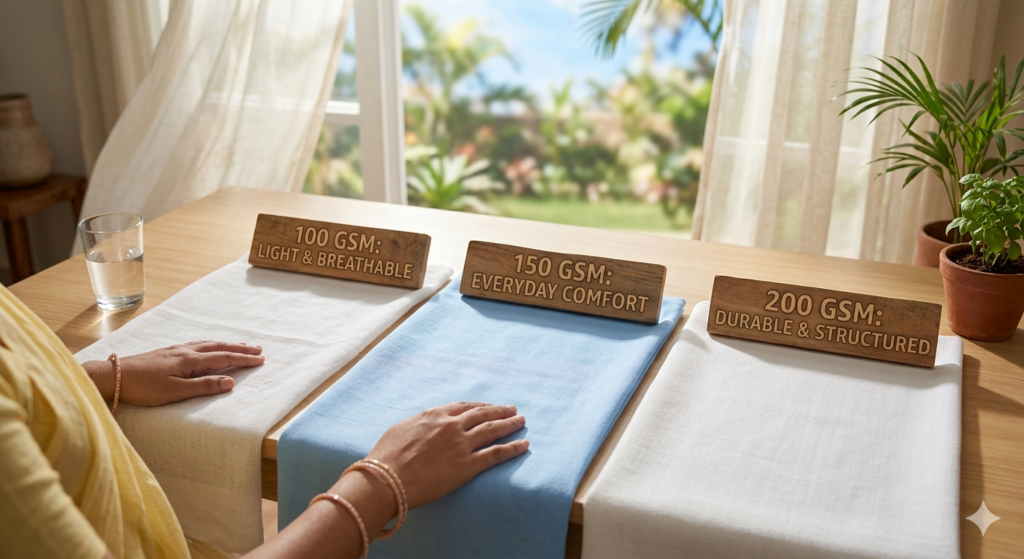
100 GSM vs 150 GSM vs 200 GSM Cotton: Which Is Best for Indian Summers?

100 GSM vs 150 GSM vs 200 GSM Cotton: Which Is Best for Indian Summers? When shopping for cotton clothes, you may have come across a term that sounds more technical than fashionable: GSM. You may see fabric described as 100 GSM, 150 GSM, 180 GSM, 200 GSM or even higher. But what does GSM actually mean? Does higher GSM mean better cotton? And most importantly, which GSM is best for India’s hot and humid summers? The answer isn’t simply “the lower, the better.” GSM tells you the weight of the fabric, but comfort depends on several other factors, including the weave, fibre, construction, finishing and garment design. In this guide, we’ll compare 100 GSM vs 150 GSM vs 200 GSM cotton and help you understand what to look for when buying cotton kurtis, co-ord sets and other summer clothing. What Does GSM Mean in Cotton Fabric? GSM stands for Grams per Square Metre. It tells you how much a square metre of fabric weighs. For example: In simple terms, as GSM increases, the fabric generally becomes heavier. However, GSM should not be treated as a direct measure of fabric quality. A 200 GSM cotton fabric isn’t automatically better than a 100 GSM cotton fabric. They can simply be designed for different purposes. When shopping for cotton clothing, you may have come across terms like 100 GSM, 150 GSM and 200 GSM. But what do these numbers actually mean? In this guide, we compare 100 GSM vs 150 GSM vs 200 GSM cotton to understand their thickness, breathability, comfort and suitability for Indian summers. Why Does GSM Matter for Summer Clothing? When you’re dressing for an Indian summer, fabric weight can influence how an outfit feels. A lighter fabric may feel airy and easy to wear, while a heavier fabric may provide more structure and coverage. But there is an important catch. Fabric weight and breathability are not exactly the same thing. The weave and construction of the fabric can influence airflow and how the material feels against the body. Finishing and garment construction can also affect the final feel. That’s why simply searching for the lowest GSM fabric isn’t always the best way to choose summer clothing. 100 GSM Cotton: Lightweight and Airy 100 GSM cotton sits on the lighter side of the comparison. Because the fabric contains less material by weight per square metre, it can feel light and comfortable, particularly when the construction is open and breathable. Advantages of 100 GSM Cotton Things to Consider Very lightweight cotton can sometimes have less body or coverage than a heavier fabric. Depending on the weave and colour, it may also be more transparent. So, 100 GSM isn’t automatically the best choice for every garment. For example, a lightweight cotton fabric may be excellent for a loose summer top but may require a different construction or lining when used for another type of garment. Best suited for: 150 GSM Cotton: The Summer Sweet Spot? Now we come to 150 GSM cotton. For many everyday garments, this weight can offer a useful balance between lightness, coverage and structure. It doesn’t necessarily feel as delicate as very lightweight cotton, while still being comfortable enough for warm-weather clothing. Advantages of 150 GSM Cotton This makes medium-light cotton particularly interesting for everyday kurtis and co-ord sets. For Indian summers, where you may need to move between outdoor heat, offices, shopping areas and air-conditioned spaces, having a fabric that balances comfort and structure can be practical. Best suited for: 200 GSM Cotton: Heavier, Structured and More Substantial At around 200 GSM, cotton fabric is considerably heavier than 100 GSM fabric. This doesn’t mean it is uncomfortable. In fact, heavier cotton can provide benefits such as greater body, structure and coverage. However, for extremely hot and humid conditions, you may prefer a lighter construction depending on the garment. Advantages of 200 GSM Cotton Things to Consider A 200 GSM fabric can feel warmer than a lighter fabric, particularly if the weave is dense and the garment has a close-fitting construction. Therefore, if your primary concern is staying comfortable during peak summer heat, don’t choose a fabric based on GSM alone. Best suited for: 100 GSM vs 150 GSM vs 200 GSM Cotton: Quick Comparison Feature 100 GSM 150 GSM 200 GSM Fabric weight Very light Medium-light Heavier Feel Airy and lightweight Balanced More substantial Structure Low Moderate Higher Coverage Can be lower Generally better Generally higher Hot-weather comfort Excellent when construction is breathable Very good Depends on construction Best for Very lightweight clothing Everyday summer wear Structured garments Important: These are practical generalisations, not universal rules. Two fabrics with the same GSM can feel quite different because weave, yarn, fibre characteristics and finishing can vary. Does Higher GSM Mean Better Cotton? No. This is one of the biggest misconceptions about fabric GSM. GSM measures fabric weight, not overall quality. Think about it this way: Would you say a winter jacket is “better quality” than a cotton summer shirt simply because it is heavier? Of course not. They are designed for completely different purposes. Similarly, a 100 GSM cotton fabric may be exactly what you want for a lightweight summer garment, while a 200 GSM cotton fabric may be preferable when you want more structure or coverage. When evaluating cotton clothing, look beyond GSM and consider: CottonWorks notes that textile performance can be affected by factors including fibre, yarn, construction, wet processing, finishing and garment-care practices. So, Which GSM Is Best for Indian Summers? If you’re shopping specifically for summer clothing, there isn’t one magic GSM number that works for every garment. Instead, think about what you want from the outfit. Choose around 100 GSM when: You want something extremely lightweight and airy, particularly for very hot conditions and relaxed silhouettes. Choose around 150 GSM when: You want a balance of comfort, coverage and structure for everyday clothing. For many women, this can be a practical range to look for when shopping for cotton kurtis and

• Woman wearing pastel cotton co-ord set in office
Cotton Classroom

10 Office Outfit Ideas for Working Women That Keep You Comfortable All Day

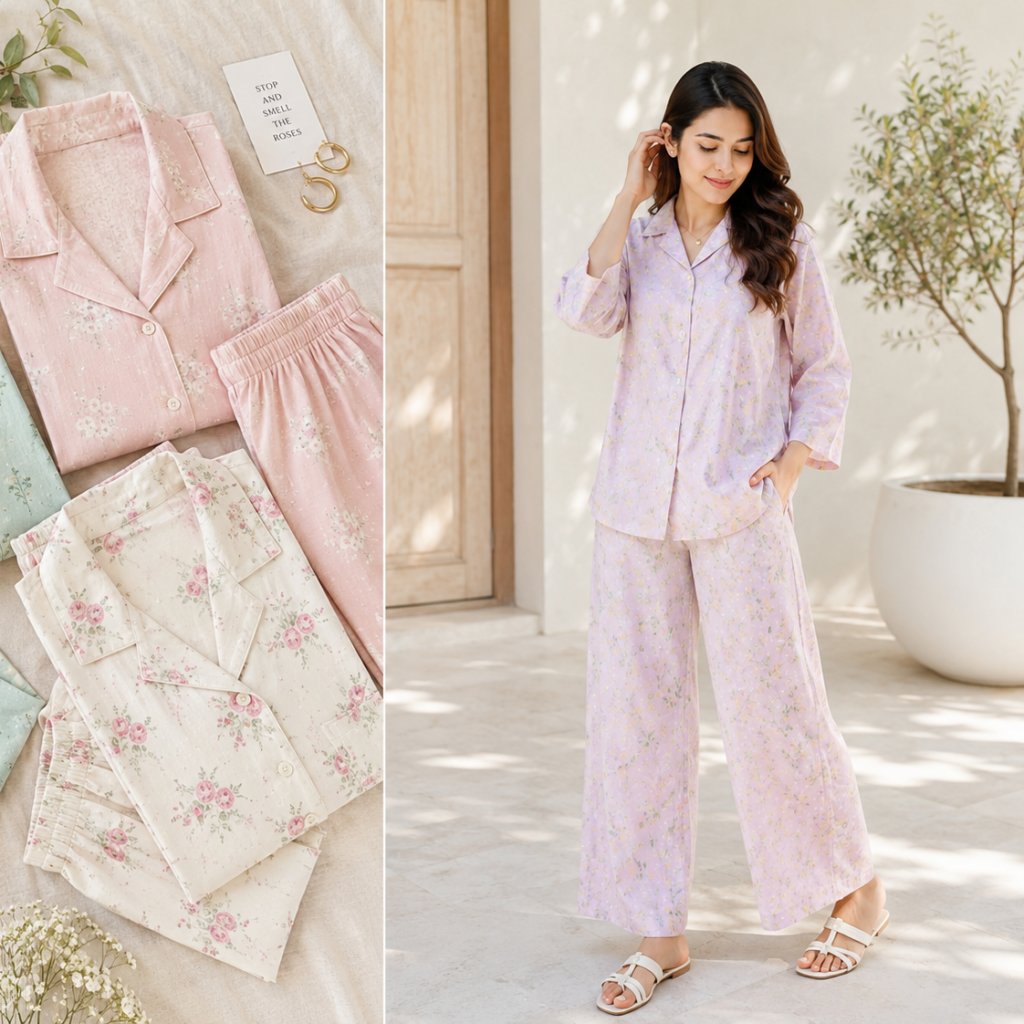
10 Office Outfit Ideas for Working Women Getting ready for work every morning shouldn’t feel stressful. Most working women want outfits that look professional, feel comfortable during long office hours, and are easy to style. Whether you’re attending back-to-back meetings, travelling to work, or sitting at your desk all day, your clothing should help you feel confident—not uncomfortable. This is where breathable cotton outfits become a wardrobe essential. Cotton is lightweight, skin-friendly, and ideal for India’s weather, making it one of the best choices for office wear. Looking for the best office outfit ideas for working women? Choosing comfortable and stylish office wear can make a big difference… In this guide, we’ll share 10 office outfit ideas for working women that combine comfort with effortless style. Whether you love co-ord sets or elegant short kurtis, these ideas will help you build a practical work wardrobe. Why Comfortable Office Wear Matters Many women spend 8 to 10 hours at work. Tight fabrics, synthetic materials, and uncomfortable clothing can make the day feel longer, especially during Indian summers and humid weather. Comfortable office wear helps you: Natural cotton fabrics are breathable and soft on the skin, making them an excellent everyday choice. 1. Cotton Co-Ord Set for Busy Monday Meetings Monday mornings usually involve planning meetings and fresh starts. A well-fitted cotton co-ord set creates a polished appearance while keeping you comfortable during long work hours. Choose colours like sage green, beige, ivory, or pastel blue for a professional look. Style Tips Explore our Women’s Cotton Co-Ord Sets collection. 2. Short Kurti with Straight Pants Short kurtis are one of the most versatile office outfits. They combine ethnic elegance with modern styling, making them suitable for almost every workplace. Neutral trousers instantly elevate the look while keeping it office-appropriate. Perfect For Browse our Cotton Short Kurtis Collection. 3. Neutral Cotton Outfit for Presentations Important presentation today? Choose neutral colours like ivory, beige, olive, or dusty pink. These shades look sophisticated without being distracting and photograph beautifully for professional events. Complete the outfit with: These office outfit ideas for working women are perfect for long office hours. 4. Smart Casual Friday Look Many workplaces follow casual Fridays. Instead of jeans and heavy tops, opt for a relaxed cotton co-ord set. The outfit feels effortless while maintaining a smart appearance. This look works especially well if your office has a creative or startup environment. 5. Monsoon-Friendly Office Outfit Monsoon dressing requires fabrics that dry quickly and remain comfortable throughout the day. Choose: Avoid very long hemlines that may collect dirt during your commute. Cotton remains one of the most breathable fabric choices for humid conditions. Quick Tips to Build the Perfect Office Wardrobe Instead of buying many outfits, build a capsule wardrobe with versatile pieces. Include: With these essentials, you can create dozens of office-ready looks without overfilling your wardrobe. Why Choose Cotton for Office Wear? Cotton continues to be one of the most recommended fabrics for daily wear because it offers: According to the Cotton Incorporated, cotton is widely valued for its comfort, breathability, and versatility across climates, making it a popular choice for everyday apparel. For general fabric care and washing guidance, you can also refer to the The American Cleaning Institute. 6. Client Meeting Ready: Elegant Cotton Co-Ord Set Client meetings often require a polished yet approachable appearance. A well-tailored cotton co-ord set in neutral or pastel shades creates a sophisticated look without compromising comfort. Cotton co-ord sets are among the most popular office outfit ideas for working women because they are breathable. Style Tips: 7. Travel-Friendly Office Outfit If your daily routine includes long commutes, your outfit should be wrinkle-friendly, breathable, and easy to move in. A cotton short kurti paired with comfortable straight pants makes an ideal travel-friendly office outfit. Complete the look with comfortable footwear and a lightweight tote bag. Pro Tip: Keep a light cotton stole or shrug in your bag if your office air conditioning is strong. 8. Neutral Colours for Everyday Elegance Neutral colours never go out of style. They look professional, are easy to mix and match, and help you build a capsule wardrobe. Some timeless office colours include: These shades work beautifully in every season and can be accessorised differently to create multiple looks. 9. Office to Dinner Look Many working women don’t have time to change outfits before meeting friends or family after work. A versatile cotton co-ord set can easily transition from office to dinner by making a few simple changes. For Office For Evening The outfit instantly feels more elevated without requiring a complete wardrobe change.If comfort is your priority, these office outfit ideas for working women are worth trying. 10. Friday Comfort Without Looking Casual Casual Fridays don’t have to mean oversized T-shirts or denim every week. Instead, choose breathable cotton outfits that feel relaxed yet maintain a polished appearance. A printed short kurti with ankle-length trousers or a soft cotton co-ord set creates the perfect balance between comfort and professionalism. Common Office Dressing Mistakes to Avoid Even stylish outfits can lose their impact if a few basic styling mistakes are overlooked. Avoid these common mistakes: Simple, comfortable, and well-fitted clothing often creates the strongest impression. Build a Smart Office Wardrobe with Versatile Cotton Pieces Instead of buying many outfits, invest in versatile pieces that can be styled in different ways. A practical wardrobe could include: These essentials can help you create multiple office looks while saving time every morning. Frequently Asked Questions Which fabric is best for office wear in India? Cotton is one of the best choices because it is breathable, lightweight, and comfortable for long working hours, especially during warm and humid weather. Can I wear co-ord sets to the office? Absolutely. Solid-coloured or subtle printed cotton co-ord sets offer a professional appearance and are suitable for many modern workplaces. Are short kurtis appropriate for office wear? Yes. Short kurtis paired with straight pants or cigarette trousers create a smart, elegant, and comfortable office outfit.

Cotton Classroom

How to Choose Cotton Clothes for Hot and Humid Weather

Introduction When summer arrives, dressing comfortably becomes just as important as dressing stylishly. High temperatures combined with humidity can leave you feeling sticky, sweaty, and exhausted if you’re wearing the wrong fabric. Many people unknowingly choose synthetic materials that trap heat and moisture, making even a short outing uncomfortable. This is where cotton clothes for hot and humid weather become the perfect solution. Cotton is naturally breathable, lightweight, and soft against the skin. It absorbs sweat, allows air to circulate, and helps keep your body cool throughout the day. Whether you’re travelling, working, shopping, or simply enjoying a weekend outing, choosing the right cotton outfit can make a noticeable difference in your comfort. In this guide, we’ll explain how to select the best cotton clothing for hot and humid weather, the fabrics that work best, common shopping mistakes to avoid, and styling tips to help you stay cool without compromising on fashion. Why Hot and Humid Weather Requires Breathable Clothing Summer heat isn’t the only challenge. Humidity makes the weather feel even warmer because sweat evaporates more slowly, leaving your skin feeling damp and uncomfortable. Wearing fabrics that don’t breathe only worsens the problem by trapping heat close to your body. Choosing breathable clothing helps your body regulate its temperature naturally. Instead of feeling overheated, you’ll remain fresher for longer, even during busy days. Common problems caused by wearing the wrong fabric include: This is why fabric matters just as much as style during summer. Investing in breathable clothing is one of the easiest ways to stay comfortable throughout the season. Why Cotton Is the Best Fabric for Hot and Humid Weather Cotton has remained one of the world’s most popular fabrics because it combines comfort, durability, and breathability. Unlike many synthetic materials, cotton allows air to circulate freely, reducing heat build-up and helping your skin breathe. Here are some of the reasons cotton is the preferred choice for summer clothing: Excellent Breathability Cotton fibres allow fresh air to circulate, helping your body stay naturally cool. Absorbs Moisture Instead of trapping sweat against your skin, cotton absorbs moisture, making it much more comfortable during humid weather. Gentle on Sensitive Skin Its soft, natural fibres reduce the chances of irritation, making cotton suitable for people with sensitive skin. Lightweight and Comfortable Cotton garments are ideal for long working hours, travelling, shopping, or simply relaxing at home because they feel light and comfortable throughout the day. If you’d like to understand why different cotton fabrics perform differently in summer, read our guide on best cotton fabric for summer, where we explain popular cotton varieties and their benefits. What to Look for When Buying Cotton Clothes Not every cotton garment provides the same level of comfort. Paying attention to the fabric composition and design can help you make smarter choices. 1. Check the Fabric Composition Always read the clothing label before making a purchase. Look for: The higher the cotton content, the better the garment usually performs in hot weather. Avoid buying clothes simply because they look stylish. The fabric composition is what determines how comfortable you’ll feel throughout the day. 2. Choose Lightweight Cotton Fabrics Some cotton fabrics are especially suitable for warm climates. Mulmul Cotton Known for its airy texture and softness, Mulmul is one of the lightest cotton fabrics available. It’s ideal for extremely hot days. Cambric Cotton Cambric has a smooth finish and is widely used for comfortable kurtis and casual wear. Poplin Cotton Poplin offers a crisp appearance while remaining breathable, making it perfect for office wear and semi-formal outfits. Each of these fabrics provides excellent comfort without compromising on style. 3. Choose Relaxed Fits The fit of your clothing affects how comfortable you feel in summer. Loose-fitting garments improve airflow, reduce sweating, and allow easier movement. Good options include: Relaxed silhouettes not only keep you cool but also create an effortless and elegant look. Best Cotton Clothes for Hot and Humid Weather Choosing the right outfit can make summer dressing both practical and stylish. Cotton Co-Ord Sets Cotton co-ord sets have become one of the most popular wardrobe choices for modern women because they combine comfort with effortless styling. Whether you’re heading to work, shopping with friends, travelling, or attending a casual brunch, a cotton co-ord set keeps you looking polished while staying cool throughout the day.Their biggest advantage is versatility—you don’t have to spend time matching separates, and you can also mix and match the pieces with other wardrobe staples. If you’re wondering why these outfits have become a summer favourite, read our article on why cotton co-ord sets are perfect for Indian summers for more styling ideas and comfort tips. Cotton Short Kurtis: A Summer Wardrobe Essential Cotton short kurtis are another excellent choice for hot and humid weather. Their lightweight design and versatility make them suitable for almost every occasion, from casual outings to office wear. One of the biggest advantages of cotton short kurtis is how easily they can be paired with different bottoms. You can wear them with jeans, straight pants, palazzos, or even cotton trousers to create multiple looks without compromising comfort. When shopping for a cotton kurti, choose breathable fabrics, lighter shades, and comfortable fits. Avoid heavily embroidered designs for everyday summer wear, as simpler styles feel lighter and are easier to maintain. Choose Light Colours During Summer The colour of your clothing plays a significant role in how comfortable you feel during summer. Light shades reflect sunlight, while darker colours absorb more heat. For hot and humid weather, choose colours such as: These shades not only keep you cooler but also create a fresh and elegant summer look. Pastel colours are particularly popular because they complement cotton fabrics beautifully and are easy to style with neutral accessories. Common Mistakes to Avoid When Buying Summer Clothes Many people focus only on the appearance of an outfit and overlook the fabric quality. While a garment may look fashionable, it may not be comfortable enough for long hours in warm weather.

Woman wearing a breathable pure cotton co-ord set for everyday comfort.
Cotton Classroom

Pure Cotton vs Cotton Blend: Which Fabric Is Better for Everyday Wear?

Pure Cotton vs Cotton Blend: Which Fabric Is Better for Everyday Wear? Introduction When shopping for clothes, you’ve probably noticed labels such as 100% Cotton, Cotton Blend, Cotton Polyester, or Cotton Lycra. At first glance, they may seem similar, but the fabric you choose can significantly affect your comfort, especially in India’s hot and humid climate. Whether you’re buying a cotton co-ord set, a casual kurti, office wear, or everyday clothing, understanding the difference between pure cotton and cotton blend helps you make a smarter purchase. Many people believe that cotton is always cotton, regardless of the label. In reality, that’s not true. Pure cotton and cotton blend fabrics differ in breathability, softness, durability, maintenance, and even how they feel after several washes. If you’ve ever wondered why one cotton outfit feels cool and airy while another feels slightly warm or less breathable, the answer often lies in the fabric composition. In this guide, we’ll explain everything you need to know about pure cotton and cotton blends, compare their benefits, discuss where each fabric performs best, and help you choose the perfect option for your lifestyle. What is Pure Cotton? Pure cotton is made entirely from natural cotton fibres harvested from the cotton plant. Since it contains 100% natural fibres, it is one of the most breathable and comfortable fabrics available. For centuries, cotton has been the preferred fabric for everyday clothing because it is soft, lightweight, and gentle on the skin. It absorbs moisture effectively and allows air to circulate, helping the body stay cool even during long summer days. One of the biggest reasons people love pure cotton is its comfort. Unlike many synthetic fabrics, cotton doesn’t trap excessive heat. Instead, it keeps you feeling fresh throughout the day, making it ideal for daily wear, travel, office wear, and casual outings. Benefits of Pure Cotton Because of these qualities, pure cotton remains one of the most popular choices for Indian summers. What is Cotton Blend? A cotton blend is created by mixing cotton with one or more other fibres, either natural or synthetic. Some of the most common cotton blends include: Each blend is designed to improve specific characteristics of the fabric. For example: Because of these added fibres, cotton blends are often easier to maintain than pure cotton. However, they usually sacrifice some breathability and moisture absorption. Why Do Clothing Brands Use Cotton Blends? Many fashion brands choose cotton blends because they offer practical advantages for manufacturing and everyday use. 1. Lower Production Cost Synthetic fibres are generally less expensive than natural cotton. Mixing cotton with polyester or other fibres reduces production costs while maintaining an attractive appearance. 2. Better Wrinkle Resistance One common drawback of pure cotton is that it wrinkles easily. Cotton blends resist wrinkles better, making them suitable for busy lifestyles. 3. Improved Durability Polyester fibres strengthen the fabric, allowing garments to withstand repeated washing and daily use. 4. Faster Drying Cotton blends dry more quickly than pure cotton, making them convenient for travel and frequent washing. 5. Stretch and Flexibility Blends containing Lycra provide greater freedom of movement, making them ideal for activewear and fitted clothing. Pure Cotton vs Cotton Blend: A Detailed Comparison Feature Pure Cotton Cotton Blend Breathability ⭐⭐⭐⭐⭐ ⭐⭐⭐ Comfort ⭐⭐⭐⭐⭐ ⭐⭐⭐⭐ Moisture Absorption Excellent Moderate Durability Good Very Good Wrinkle Resistance Low High Drying Time Moderate Fast Skin Friendliness Excellent Depends on Blend Eco-Friendly Yes Less Eco-Friendly Summer Comfort Excellent Good At first glance, cotton blends may appear to be the better choice because they wrinkle less and last longer. However, when comfort is your priority—especially in warm weather—pure cotton continues to stand out. Pure Cotton vs Cotton Blend: Which Fabric Feels Better? Comfort is one of the biggest reasons people choose cotton clothing. Pure cotton has a soft, airy feel that becomes even more comfortable after repeated washes. It allows your skin to breathe naturally, making it an excellent option for everyday wear. Cotton blends, on the other hand, often feel smoother initially due to the synthetic fibres. However, they may retain more heat and may not absorb sweat as effectively as pure cotton. For people living in warm climates or spending long hours outdoors, pure cotton is generally the more comfortable choice. Why Pure Cotton Is Perfect for Indian Summers India experiences high temperatures and humidity for several months each year. During this time, breathable clothing becomes essential for staying comfortable. Pure cotton helps regulate body temperature by allowing air to circulate freely while absorbing moisture from the skin. This combination reduces discomfort and helps you stay fresh throughout the day.https://taniroop.in/best-cotton-fabric-for-summer/ Whether you’re commuting to work, travelling, shopping, or relaxing at home, cotton clothing offers a level of comfort that’s difficult to match. That’s why cotton co-ord sets, cotton kurtis, and lightweight cotton dresses remain wardrobe essentials for women across India. If you’d like to learn more about why cotton is considered the ideal fabric for hot weather, read our Best Cotton Fabric for Summer: Benefits of Cotton and Types of Cotton for All-Day Comfort. Which Fabric Lasts Longer? One of the biggest question’s shoppers ask is whether pure cotton or cotton blend clothing lasts longer. The answer depends on how you define durability. If you’re talking about maintaining shape and resisting wrinkles, cotton blends generally perform better because synthetic fibres such as polyester add strength and reduce wear and tear. However, if you properly care for high-quality pure cotton garments, they can last for many years while becoming softer with every wash. Pure Cotton ✔ Softens over time ✔ Comfortable for years ✔ May shrink slightly if washed incorrectly ✔ Needs proper care Cotton Blend ✔ Keeps its shape longer ✔ More resistant to wrinkles ✔ Less likely to shrink ✔ Can pill after repeated washing depending on the blend If comfort is your priority, pure cotton is still an excellent long-term investment. Which Fabric Is Better for Sensitive Skin? People with sensitive skin often experience irritation from fabrics that trap heat or don’t allow

Cotton Classroom

Best Cotton Fabric for Summer: Benefits of Cotton and Types of Cotton for All-Day Comfort

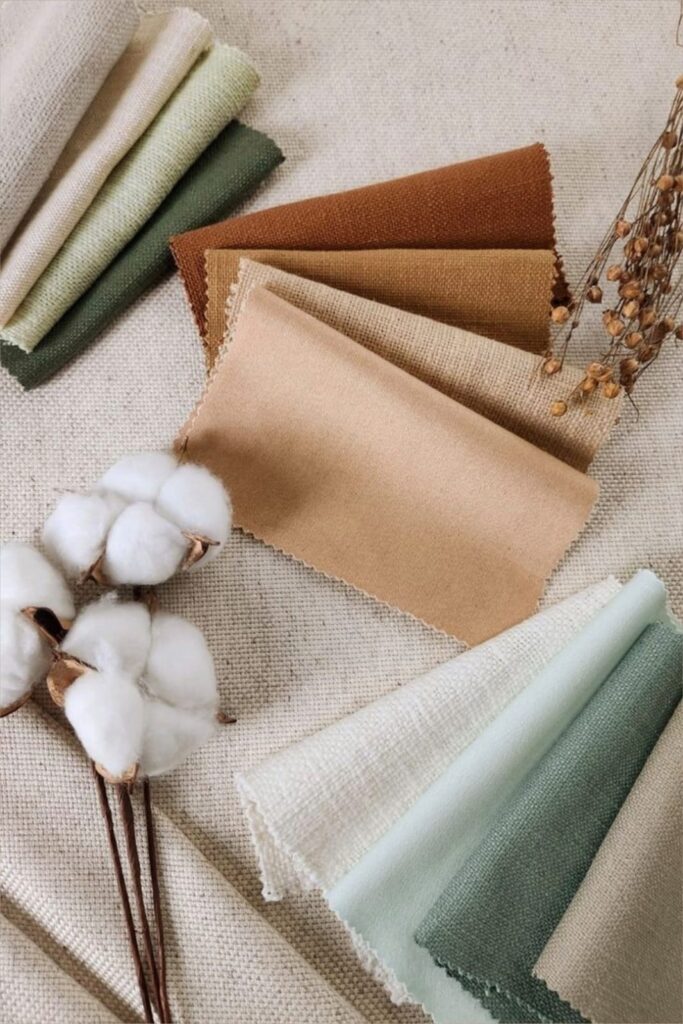
Best Cotton Fabric for Summer: Benefits of Cotton and Types of Cotton for All-Day Comfort When summer temperatures rise, choosing the right fabric becomes essential for staying comfortable throughout the day. Among all fabrics available today, cotton remains the most preferred choice for women because of its breathability, softness, and ability to keep the body cool. Whether you’re heading to work, shopping, travelling, or spending time outdoors, cotton outfits provide unmatched comfort. This is why cotton co-ord sets, short kurtis, and casual wear continue to be wardrobe essentials for Indian women. Why Cotton Is the Best Fabric for Summer Cotton is a natural fiber derived from the cotton plant. It is lightweight, breathable, and gentle on the skin, making it ideal for hot and humid weather. Benefits of Cotton Fabric 1. Breathable and Airy Cotton allows air to circulate freely, helping your body stay cool even during hot summer days. 2. Absorbs Sweat Efficiently One of the biggest advantages of cotton is its ability to absorb moisture. It helps keep sweat away from the skin, making you feel fresh for longer hours. 3. Soft on Sensitive Skin Cotton is naturally soft and less likely to cause irritation, making it suitable for people with sensitive skin. 4. Comfortable for All-Day Wear Whether you’re at the office, travelling, or working from home, cotton provides comfort without feeling heavy or restrictive. 5. Easy to Maintain Cotton garments are easy to wash and maintain. They remain comfortable even after multiple washes. Types of Cotton Fabric Not all cotton fabrics are the same. Different types offer different textures and benefits. Pure Cotton Pure cotton is made entirely from natural cotton fibers. It is soft, breathable, and perfect for daily wear. Cotton Cambric Cotton cambric is lightweight and smooth, making it ideal for stylish summer outfits and co-ord sets. Cotton Slub Cotton slub features a slightly textured appearance and offers a fashionable yet comfortable look. Cotton Linen Blend This blend combines the softness of cotton with the crisp texture of linen. It is suitable for semi-formal and casual wear. Mulmul Cotton Mulmul cotton is extremely soft, lightweight, and breathable. It is often considered one of the most comfortable fabrics for summer. Which Cotton Fabric Is Best for Summer? For all-day summer wear, lightweight cotton fabrics perform best. Pure cotton, mulmul cotton, and cotton cambric are excellent choices because they allow maximum airflow and help regulate body temperature. Women who spend long hours outdoors or travel frequently should choose loose-fitting cotton outfits that provide both comfort and style. Why Cotton Co-Ord Sets Are Perfect for Summer Cotton co-ord sets combine the comfort of cotton with modern fashion. They are easy to style, comfortable for long hours, and suitable for multiple occasions. Benefits of cotton co-ord sets include: How to Choose the Right Summer Outfit When shopping for summer clothing, look for: Common Mistakes People Make When Choosing Summer Fabrics Many people focus only on style while purchasing summer clothing and overlook the importance of fabric quality. Choosing synthetic fabrics can often lead to discomfort, excessive sweating, and skin irritation during hot weather. Some common mistakes include: For maximum comfort, always choose breathable fabrics such as cotton and opt for relaxed silhouettes that allow air circulation. Conclusion Cotton remains the best fabric for summer because of its breathability, softness, and moisture-absorbing properties. Among the different types of cotton, pure cotton, mulmul cotton, and cotton cambric are excellent choices for all-day comfort. Whether you prefer short kurtis or cotton co-ord sets, investing in quality cotton clothing helps you stay stylish and comfortable throughout the season. Shop latest collection.

Scroll to Top