
Soft, Structured or Flowing? What Fabric Does to the Look of Your Outfit
When we buy an outfit, we usually notice the design first.
The colour.
The print.
The neckline.
The silhouette.
The way it looks on the model.
But there is another element quietly deciding how that outfit actually looks on you — the fabric.
Two dresses can have exactly the same design, but look completely different simply because they are made from different fabrics.
One may fall softly around the body. Another may hold its shape. One may move beautifully when you walk, while another may create a more defined silhouette.
That is the interesting part of fashion: fabric doesn’t just cover a design. It helps create the design’s personality. “Fabric drape refers to the way a fabric falls, folds and moves when worn, and it can dramatically change the look of the same outfit.”
“What Does Fabric Drape Actually Mean?”
In simple words, drape is the way fabric falls, folds and moves when you wear it.
A fabric with a soft, fluid drape tends to move with the body and create gentle folds. A more structured fabric holds its shape and gives an outfit a cleaner, sharper appearance.
And neither one is automatically better.
It simply depends on the look you want.
Think of it this way:
Soft fabric → effortless and fluid
Structured fabric → polished and defined
Flowing fabric → movement and ease
The same silhouette can therefore give you three completely different moods.
1. Soft Fabrics: For an Easy, Relaxed Look
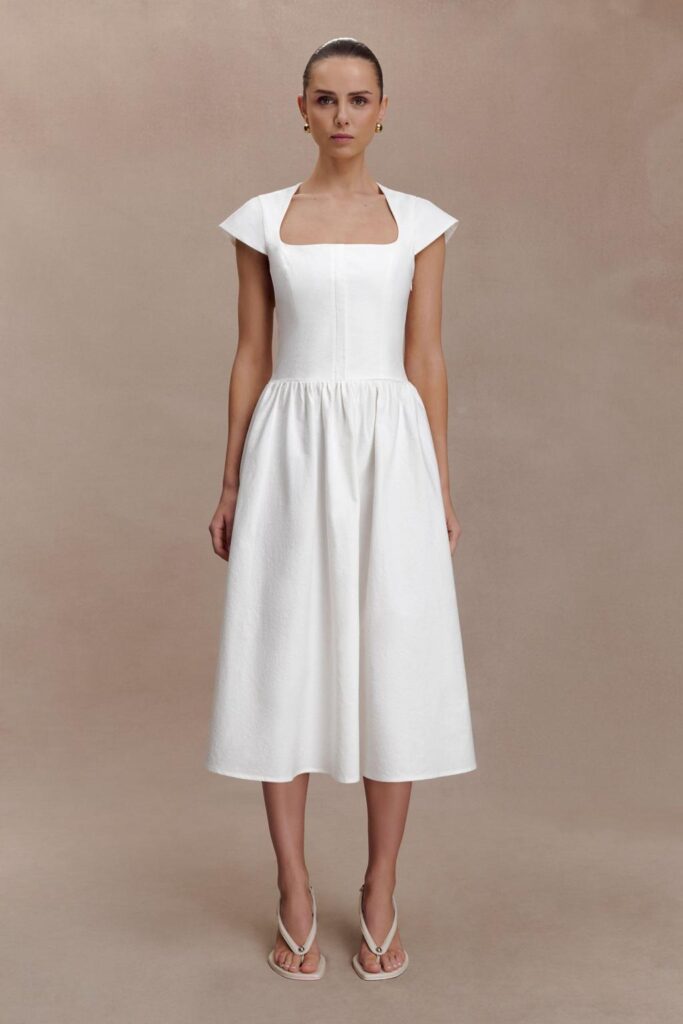
Soft fabrics tend to feel comfortable and move naturally with the body.
They are often chosen when the goal is an outfit that looks easy, feminine and effortless, rather than very sharp or tailored.
Lightweight cotton, rayon and similar fabrics can create softer movement, although the final appearance also depends on the fabric’s weight and construction.
Imagine a simple summer dress.
In a soft fabric, it may gently follow your movement as you walk. The overall look feels relaxed rather than formal. The fabric drape can make the same dress feel more relaxed and effortless.
Perfect for:
- Everyday dresses
- Casual kurtis
- Easy summer outfits
- Relaxed co-ord sets
- Weekend dressing
The beauty of a soft fabric is that it doesn’t have to try too hard.
2. Structured Fabrics: When You Want the Outfit to Hold Its Shape
Now imagine the same dress made from a fabric with more body.
Suddenly, the silhouette looks different.
The shoulders may look more defined.
The A-line may stand out more clearly.
The folds may look sharper.
The entire outfit may feel more polished.
Cotton is particularly versatile because its drape can range from relatively soft to more structured depending on its weight, weave and construction.
This is why saying “cotton always looks casual” isn’t quite right.
A lightweight cotton dress can look soft and relaxed.
A more substantial cotton fabric can create a much more defined silhouette.
Structured fabrics work beautifully for:
- A-line dresses
- Shirt dresses
- Tailored kurtis
- Structured co-ord sets
- Boxy silhouettes
- Minimal, clean designs
Sometimes, the simplest design looks the most polished when the fabric gives it enough structure.
3. Flowing Fabrics: When Movement Becomes Part of the Outfit
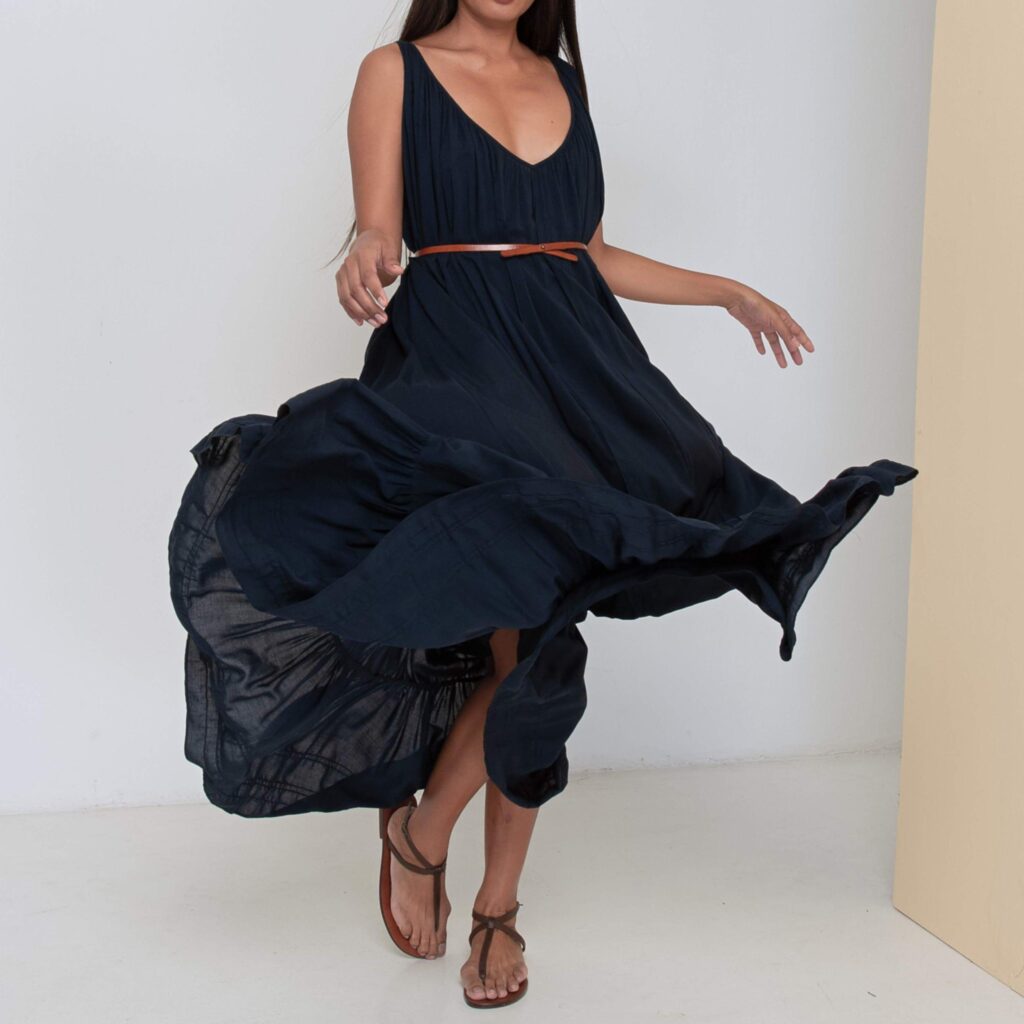
Some fabrics are all about movement.
You walk — the fabric moves.
You turn — it follows.
You sit — it falls around you.
This is where fabrics with a more fluid drape become interesting. Rayon and viscose, for example, are often used when designers want a softer, more flowing silhouette.
Flowing fabrics are especially beautiful in:
- Maxi dresses
- Wide-leg trousers
- Flowy kurtis
- Relaxed dresses
- Skirts
- Draped silhouettes
They can give an outfit a softer and sometimes more dressed-up appearance without adding complicated detailing.
4. The Same Design Can Look Completely Different
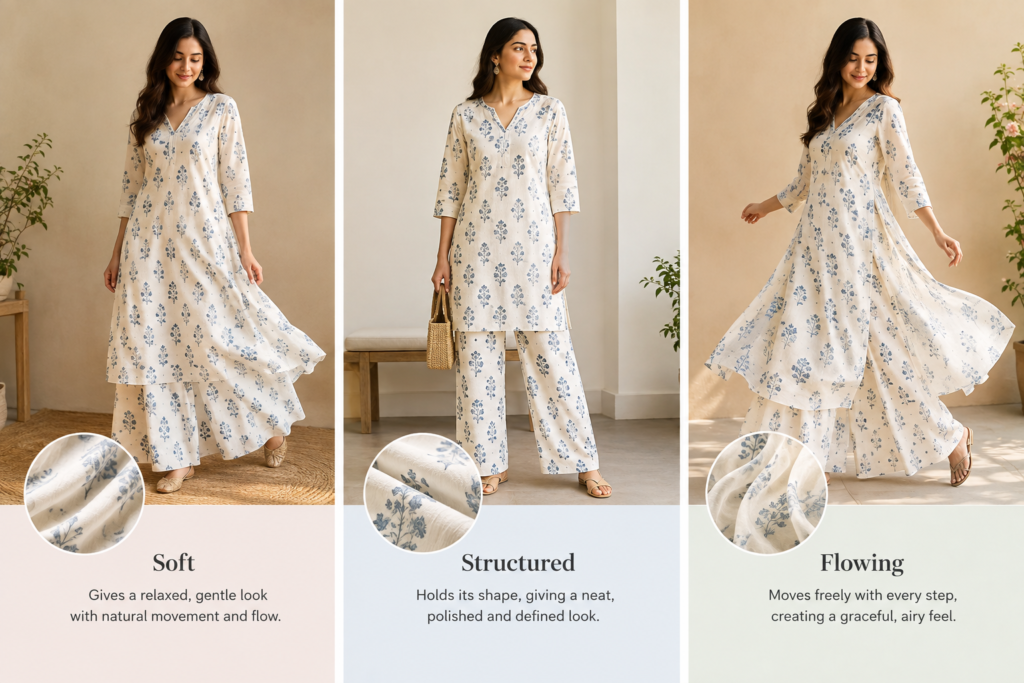
This is probably the easiest way to understand the importance of fabric.
Imagine a simple A-line dress.
In a soft cotton:
It can look relaxed, comfortable and perfect for everyday wear.
In a structured cotton:
The A-line becomes more defined and polished.
In a fluid fabric:
The same A-line can become softer, more feminine and movement-focused.
Same design. Different fabric. Completely different personality.
That is why fabric selection is such an important part of fashion design.
The fabric and the silhouette have to work together. This shows why fabric drape matters just as much as the design itself.
5. Fabric Weight Matters Too
It isn’t only about whether a fabric is called cotton, linen, rayon or something else.
Weight matters.
A lightweight cotton and a heavy cotton won’t behave in exactly the same way.
Similarly, two fabrics made from the same fibre can have very different drapes because of differences in construction and weight.
This is why simply saying:
“It’s cotton.”
doesn’t tell you the entire story.
You also want to think about:
How light is it?
How does it fall?
How does it move?
Does it hold its shape?
These details help determine the final look of the garment.
6. What Should You Choose?
There is no universal “best” fabric.
Instead, think about the mood you want from your outfit.
| If you want… | Look for… |
|---|---|
| An effortless everyday look | Soft, comfortable fabrics |
| A clean, polished silhouette | More structured fabrics |
| Lots of movement | Fluid, flowing fabrics |
| A relaxed summer outfit | Lightweight breathable fabrics |
| A defined A-line shape | Medium or structured fabric |
| A soft, feminine silhouette | Fabrics with more fluid drape |
And remember: the fabric doesn’t work alone.
The cut, stitching, silhouette, fit and even the finishing of the garment all contribute to how the final outfit looks.
7. Why This Matters When You Shop Online
When shopping online, you see a photograph of the finished outfit.
But the photograph doesn’t always show you how the fabric behaves when you move.
That’s why sometimes you fall in love with a dress online, but when you wear it, it feels completely different from what you imagined. Understanding fabric drape can also help you make better choices when shopping online.
The reason may not be the design.
It may simply be the fabric and the way it falls.
So next time you see an outfit you love, don’t just ask:
“Do I like this design?”
Also ask:
“Do I like the way this fabric is behaving with this design?”
That small change in thinking can completely change the way you shop for clothes.
Fabric Is Part of the Design
At Taniroop, we believe that comfort and style don’t have to compete with each other.
A beautiful outfit should not only look good in a photograph — the fabric, silhouette and movement should make sense together.
That is why cotton is at the heart of our collection. Cotton is a versatile natural fibre widely used in fashion and apparel, and its final feel and behaviour can vary significantly depending on the fibre, yarn, weave and construction.
Whether it’s a short kurti designed for everyday styling or a co-ord set made for a more polished look, the fabric helps determine the personality of the outfit.
Because sometimes, the difference between “nice” and “I love how this looks on me” is simply how the fabric falls.
Explore Taniroop
Looking for comfortable cotton outfits that are easy to style?
You can also read our guide on How to Choose Cotton Clothes for Hot and Humid Weather for more ideas on choosing comfortable cotton clothing for Indian weather.
Further Reading
If you’re interested in understanding cotton and textile fibres in more detail, Textile Exchange provides resources explaining cotton fibres, classification and the wider textile industry.
Learn more about cotton and textile fibres →
Final Thought
Fashion isn’t only about what a garment looks like on a hanger.
It is about how the fabric, design and movement come together when you actually wear it.
So the next time you fall in love with a dress, look beyond the print and silhouette.
Look at the fabric too.
Because soft, structured or flowing — the fabric helps tell the story of the outfit.